Product leadership that gets the right things built.
Head of Product and consultant for companies building in blockchain, fintech, insurtech, medtech and AI, with a keen interest in gaming. Engineer since 14, product leader today: I speak both boardroom and engineering, so nothing gets lost in translation.
Available for executive product roles, fractional leadership and advisory.
Six asks, six directions. Everyone is busy, nobody agrees.
Try it. This is the part of the job I enjoy most. Play the full game
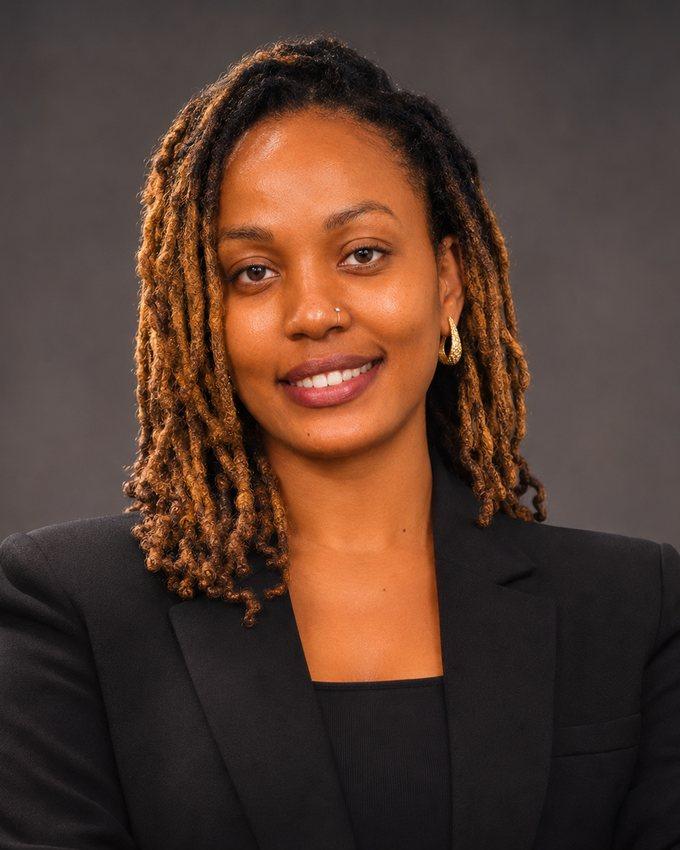
About Clara
I am a Head of Product at a blockchain and fintech company, working with teams across Africa, the USA, Europe and Canada. I have been an engineer since I was 14. I started building software in high school, and my first build was a rental system for our neighbourhood movie shop, to rent out its CDs. I turned that hobby into a full-time career across Kenya, Germany and Nigeria ten years later.
Today I work where product strategy, execution and user experience meet. I help companies make better product decisions, give teams the clarity and structure to act on them, and make sure what gets built solves problems worth solving.
Read the full storyHide the full story
I didn't originally set out to move into product. We were a small team where everyone wore multiple hats, and while I was involved in product, most of my time was spent in engineering. When the opportunity came to take on a more dedicated product leadership role, it felt like a natural next step. I had worked across every product in the company, understood how they were built, the people behind them, and the challenges we were collectively working through. Having experienced many of those challenges firsthand as an engineer, I was excited by the opportunity to bring my technical perspective into shaping the products themselves.
I initially focused on strengthening how we worked. I introduced sprints and in-depth product analytics across our products to improve structure, visibility and accountability, alongside AI-assisted triage for customer care. Much of this came from problems I had encountered firsthand in engineering. I wanted to make it easier for teams to collaborate, make decisions and spend more time building, as well as get Exec insight into the products' status with analytics.
As I became more involved in the broader product function, my perspective naturally expanded. I started looking beyond execution to the thinking that guides it: how we define product direction, understand customer needs, align priorities and connect what we build to the wider business strategy. I became increasingly interested in the decisions behind the roadmap: the customer problems worth solving, the GTM plans, the assumptions we make, and the priorities that determine what gets built, when and why.
My work consequently expanded into product discovery and strategy, user journeys and design. I'd always been particularly interested in technical products involving workflows, infrastructure and security. These products can be incredibly capable, but capability alone doesn't guarantee a good user experience. They also need to make sense to the people using them, fit naturally into their workflows and solve problems in ways that feel intuitive, and I quickly realized how much value I could offer in such situations.
Outside my primary role, I consult for Deph Labs, a precision health company, on product and engineering. I'm also in my third year of a law degree, which gives me an additional perspective on building products in regulated environments and understanding the legal and compliance considerations that shape product decisions.
Education and learning
- Daystar UniversityBA Mass Communication
- LLB, third year (in progress)

- Oxford Saïd Business SchoolLeading Through Uncertainty and Disruption
- Ethereum Developer Degree

Currently


Previously



Clients of Factor Eleven GmbH, where I was a Product UI Engineer


Over a decade building, so I can tell real shifts from hype
I wrote my first software at 14 and have built through three waves since: web, blockchain and now AI. Each arrived with big promises. Seeing them from the inside, I know which ones last and which are noise.
For a company, that means fewer expensive detours. The right bets get funded, the shiny ones get tested cheaply, and you hear what is hard before the money is spent.
- Honest timelines. I know what is hard before work starts, so you hear it early and not on launch day.
- Sharper questions. I can check a technical claim, including one from a vendor.
- Security-minded. Security coursework means I ask about access, data handling and risk at the start, not after an incident.
- Regulation-ready. Studying law means compliance questions come up early, not after launch.
- Plain-language communication. A degree in mass communication helps me explain technical products to boards and buyers.
What brings you here?
Choose the closest one. Each has a different worry, and a different first step.
The worry
Did this person personally own the strategy and the hard trade-offs, or were they only present when the product succeeded? Can they tie product to business goals?
What I bring
I own the roadmap and its trade-offs, link each decision to a business goal, and bring an engineer’s credibility to the technical team.
A low-risk first step
A 20-minute conversation. I will send a one-page profile beforehand.
Book a 20-minute conversationThe worry
The team keeps shipping, but growth, retention or revenue are not moving.
What I bring
A short diagnostic that finds where decisions go wrong, and the few changes that matter most.
A low-risk first step
A call, then a fixed-scope diagnostic of one to two weeks, ending in a written readout.
Book a 60-minute session · $100The worry
Buyers, partners and even your own team cannot say what you do in one sentence.
What I bring
Plain writing about technical products, from someone who has built them.
A low-risk first step
Tell me the topic and the audience. I reply with a short outline before anything else.
Commission a pieceWhy companies need product leadership
Product leadership decides what gets built, when and why, then gets the whole company behind it. Companies usually feel the gap before they can name it.
Signs it is time
- More than one product line. Existing revenue and new bets compete for the same team.
- Fast growth. There are more opportunities than the team can say yes to.
- New markets. New compliance, pricing and go-to-market questions arrive at once.
- A disjointed customer experience. Churn rises and the roadmap loses focus.
- Sales and engineering out of step. One-off customer requests end up driving what gets built.
What product leadership covers
Strategy tied to business goals
Turning company goals into a clear product strategy and a roadmap that serves them.
When to build, and when to say no
Deciding what gets built, in what order, and what is left out, so teams stop chasing every request.
Customer insight and analytics
Turning what customers say into what they need, and measuring whether it worked.
Pricing and packaging
Connecting product choices to revenue, so features earn their place commercially.
One plan across the company
Keeping sales, engineering, support and leadership working from the same priorities.
A product team that grows
Hiring and developing product people so the work does not depend on one person.
User journeys and design
My work grew into product discovery, user journeys and design. Capability alone does not make a product succeed. It has to make sense to the people who use it.
Sources: Andreessen Horowitz, Insight Partners, Dragonboat on the role of the chief product officer.
What goes wrong without it
The loudest voice wins
Without a clear owner, teams get pulled between the loudest customer and the latest executive opinion. Product people call this the feature factory.
Term coined by John CutlerOutput is counted, outcomes are not
Teams measure features shipped instead of what changed for customers and the business, so a busy roadmap can still go nowhere.
One-off requests drive the roadmap
When sales and engineering are out of step, a single customer’s ask can quietly outrank the work that serves everyone.
Andreessen Horowitz, Hiring a Chief Product OfficerThe backlog game Play it
Most product problems are decision problems. Here are nine asks, one team, and room for only three things Now. Tap a card, then tap where it goes. On a computer you can drag instead.
You are the Head of Product for a day
Nine asks just landed and everyone swears theirs is urgent. You only have three slots in Now. Choose well.
- Tap a card
- Tap where it goes
- Check your plan
Pick a card to begin.
Backlog Rookie: 0 of 9 match my plan
That is completely normal. Real backlogs are messier than this one, and it helps to have someone outside the team decide alongside you.
Want this done for your backlog? Book a 60-minute session · $100Experience in practice
Real situations from my career. Open one to see the problem, what I did and what changed.
From competing requests to one backlog
Head of Product at a company with several products. Blockchain and fintech.
From competing requests to one backlog
- Problem
- Requests from support, sales, marketing and leadership were pulling teams in different directions, and staff named it as their biggest slowdown.
- What I did
- Put every request through a single backlog with a named owner. Introduced product analytics, and a release routine where real users test alongside QA.
- Result
- One roadmap, clear ownership, and the first view of how users move through the products.
An AI assistant that answers first and hands over well
Head of Product at a growing product company. Customer care.
An AI assistant that answers first and hands over well
- Problem
- Customer questions were growing faster than the care team.
- What I did
- Shipped an in-app assistant that resolves product and account questions, and escalates only what it cannot solve, with response targets for urgent issues.
- Result
- A meaningful share of care capacity freed for the cases that need a person.
Leading a team to deliver a government tender submission
Product Owner, then Head of Product. Government tender for gold traceability.
Leading a team to deliver a government tender submission
- Problem
- The company wanted to win a government tender for gold traceability, and needed a credible product submission to put forward.
- What I did
- Collected the product requirements, including research into open-source APIs. Led the roadmap for the technical team and split the work into clear deliverables. Budgeted to bring the team together in person for a week to brainstorm and deliver, and motivated them to build a Hyperledger chain in two days.
- Result
- The team delivered the tender submission for a gold traceability product.
A business AI product, built and sold on a small budget
Botmara AI. Founder and CTO, Kenya and East Africa.
A business AI product, built and sold on a small budget
- Problem
- Small and mid-sized businesses could not afford round-the-clock customer replies.
- What I did
- Built chatbots for websites and WhatsApp Business, trained on each client’s own products and policies, with mobile payments and several languages. Won clients through demos and discovery calls.
- Result
- Four paying business clients, and enough revenue to cover running costs within two months, on about $500 a month of initial company spend, using open-source models.
One platform, many global brands, no room for error
Product UI Engineer, Factor Eleven GmbH. Advertising technology.
One platform, many global brands, no room for error
- Problem
- Each enterprise brand needed its own look on a shared advertising platform, with no tolerance for mistakes.
- What I did
- Primarily maintained the theming repository for the platform’s 20+ clients, and built internal reuse tooling that cut repeated manual work.
- Result
- 100% brand accuracy, 50% less manual repetition, and campaign turnaround cut from days to hours.
From zero to revenue as a founding engineer
Moda Analytica. Founding full-stack engineer. Insurtech.
From zero to revenue as a founding engineer
- Problem
- An early-stage insurance-tech company needed a first product it could sell.
- What I did
- Built the MVP end to end. Its quote funnel became the most-used flow and turned 20 users into paying customers. Then led four engineers through a performance-focused refactor.
- Result
- A product with paying customers, and a 60% gain in performance and reliability.
Earlier, as an apprentice full-stack engineer at Kamsware, I maintained enterprise web interfaces in React and C#. Some details are anonymized out of respect for current and past employers. I am glad to go deeper in a conversation.
My first 90 days
For a full-time role or a fractional engagement, the shape is the same. You always know what happens next.
Listen and diagnose
Meet engineers, sales, support, customers and leadership. Map every request, every decision and every risk, including security and data handling. Deliver a plain-language readout of what is really going on.
Decide and align
Agree one roadmap, named owners and the few metrics that matter. Stop the work that does not earn its place.
Ship and measure
Deliver the first outcomes against those metrics, set the review rhythm, and plan how the team grows.
Work with me as a consultant
I help companies sort out how they decide what to build, and then build it well.
Start with a product diagnostic
A focused one- to two-week review of where your product stands, ending in clear recommendations you can act on.
- Your strategy, roadmap and how decisions get made
- Your team, your delivery and your customer signals
- A short written readout and a working session
Product operating model
For companies with several products and too many competing requests.
One roadmap, one backlog, clear owners, and a release process people trust.
You get a working prioritization system and a release routine, introduced alongside your team.
AI customer care and chatbots
For businesses that want faster support without a larger team.
Scoping and launching assistants for your website, app or WhatsApp, with handover to people when needed, and guardrails for customer data.
You get a live assistant trained on your products, and a plan for what it should and should not answer.
Strategy for technical and regulated products
For organizations turning complex technology, such as blockchain or data platforms, into a product.
A clear buyer, scoped delivery, and privacy, security and compliance designed in.
You get a product strategy, requirements, and a delivery plan ready for engineers or a tender response.
Product analytics setup
For teams that cannot yet see where users sign up, stall or leave.
Defining the metrics that matter and building dashboards your team will actually use.
You get a metrics framework and dashboards covering activation, drop-off and churn.
Articles
Most of my writing lives on DEV, where I have published 34 articles since 2020, from AI and blockchain to engineering and careers. Next up is writing for founders, CEOs and product teams on product leadership, AI and security.
I Raised a Valid Concern and Still Got It Wrong
I asked in a cross-team meeting whether someone else could lead a project. The concern was fair, but my delivery wasn't. Here's what I'd do differently.
Design & UXThe most dangerous screen in your product is the one your users trust
A trusted history screen can send money to the wrong place. A design lesson for CEOs and founders before the confirm step.
AI in productYour AI feature works. Your pricing doesn't know that yet.
In Simon-Kucher's Global Software Study 2026, 98% of software buyers said AI capabilities met or beat their expectations, but only 4% measure AI's business impact across the enterprise.
AI in productYour team doesn't need you to have the AI answer. It needs you to own the question.
Every product leader I talk to right now is getting the same message from above: move faster on AI.
AI in productAI sped up the work inside your sprint. Nobody redesigned the sprint.
Most agile teams have adopted AI the way they once adopted agile: everywhere, but not very deeply.
AI in productYou're shipping faster. Can you prove any of it worked?
AI fixed the build bottleneck, and the bottleneck moved somewhere else.
Coming next
- From engineer to product leader: what changes and what does notCareer. Coming soon
- How to talk to engineers, from someone who is oneWorking with engineers. Coming soon
- Why one backlog beats six wish listsPrioritization. Coming soon
- Output is not outcome: the metrics to set before you have usersMetrics. Coming soon
- Putting AI on the front line of customer careAI in product. Coming soon
- Security is a product decision, not a bolt-onSecurity. Coming soon
Titles are working titles. Published pieces will appear here with dates and links.
Product writing for your company
- Product strategy memos and roadmaps in plain language
- Product narratives and launch messaging
- Technical products explained for non-technical buyers
- Thought leadership under your name or mine
Let’s talk
Tell me what you are working on. I reply to every message.
Hiring for a product leader
For executive product roles. I can share my full profile before we speak.
Book a 20-minute conversationNeed product advice
For a product diagnostic, advisory or fractional leadership.
Book a 60-minute session · $100Need something written
For strategy memos, product narratives or thought leadership.
Commission a pieceOr write to hello@claraonproduct.com, connect on LinkedIn, or read my articles on DEV.